Cracks at the Window Corners: What They Say About an Older Block-and-Stucco Building
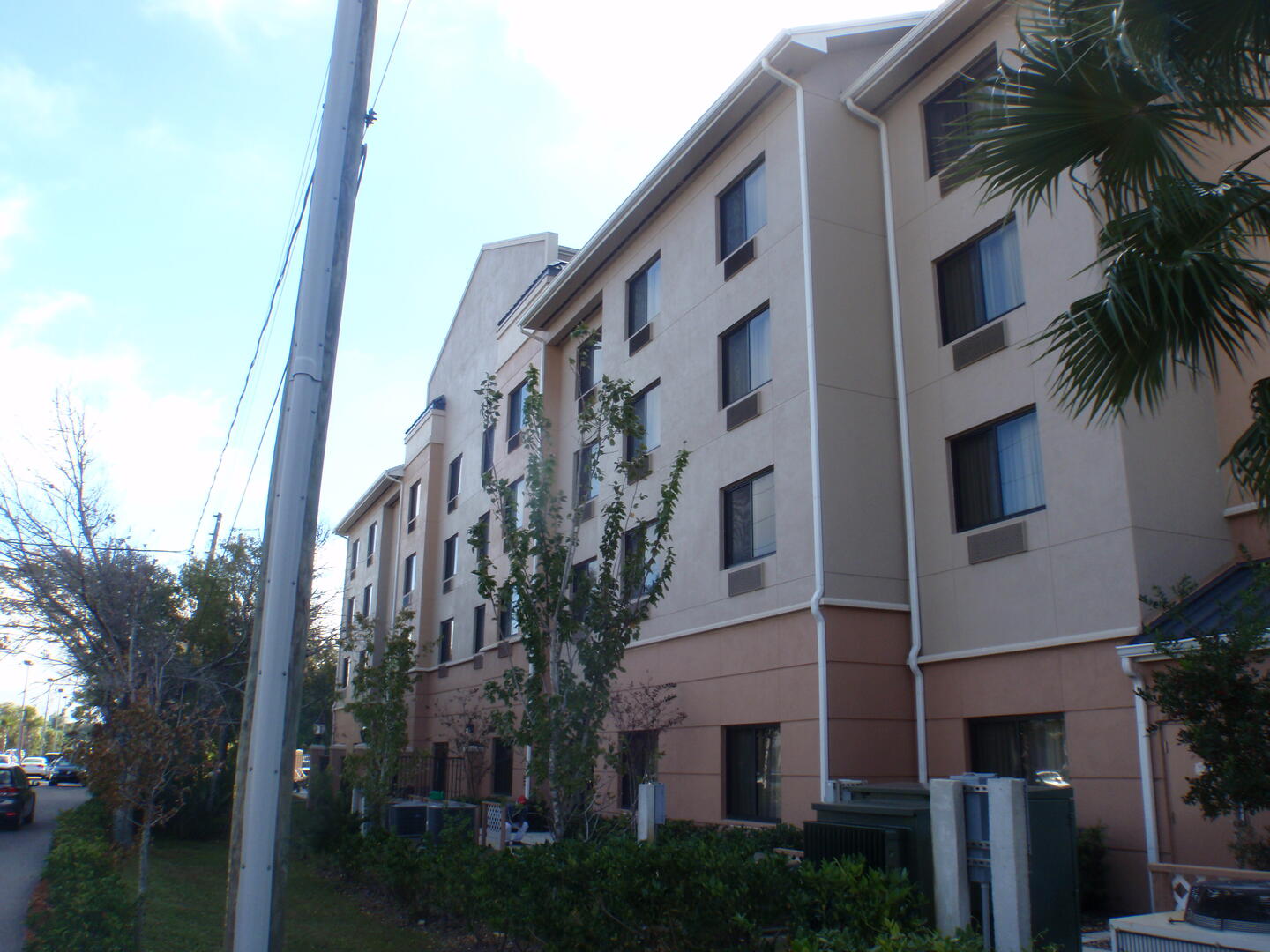
Walk around almost any condo or office building in mid-Pinellas that went up in the 1970s or 1980s and look at the corners of the windows. Odds are you will find a thin diagonal crack running out from at least one of them, angling up toward the floor above or down toward the slab.
Most boards and property managers have seen these for years. Some get painted over at every repaint, come back within a season or two, and get painted over again. The question we hear most is simple: is this cosmetic, or is it a problem?
In most cases the crack itself is not the problem. What it lets in, and what it can point to behind the wall, sometimes is.
Why window corners crack first
Most low-rise buildings of that era in this part of the county are concrete block walls with a cast-in-place concrete beam at each floor line and concrete columns at the corners. Stucco goes on directly over the block. A window opening is a hole cut through that wall, and every hole concentrates stress at its corners.
The wall moves a little every day. Block and stucco swell and shrink with heat and moisture, the concrete beam above the opening moves at a slightly different rate from the block beside it, and the whole building shifts by tiny amounts with wind. All of that movement funnels to the sharp corner of the opening. The stucco there is the weakest point, so it gives first, and the crack runs off at an angle.
On a building that has been through forty-plus Florida summers, some corner cracking is close to universal. Seeing it does not mean the building is failing.
Hairline, open, or stained
What matters is what the crack looks like up close. We sort them roughly like this:
Hairline cracks you can see but cannot catch a fingernail in. These are usually surface movement in the stucco. A good elastomeric coating system can bridge many of them, and they are the least urgent.
Open cracks wide enough to catch a fingernail, or ones that have reopened after being patched. Water can get through these, and they need to be routed out and properly filled, not just painted.
Any crack with rust-colored staining bleeding out of it, or with stucco that sounds hollow when tapped nearby. These move straight to the top of the list.
Rust stains are the part to worry about
Brown or orange streaks below a crack mean water has reached steel. On these buildings that steel might be the window fasteners and anchors, the metal lath at a stucco joint, or the reinforcing bar inside the concrete beam or column next to the opening.
Steel that rusts expands. Inside concrete, that expansion pushes the surrounding concrete apart, which opens the crack further, which lets in more water. Left alone long enough, the face of the concrete breaks off, and that is spalling. By the time a piece of the beam over a window falls out, the repair is a structural concrete repair rather than a stucco patch, and it costs accordingly.
Catching it at the stain stage is the cheap version of the same job.
The sealant around the window is often the real entry point
Before blaming the crack, look at the joint where the window frame meets the stucco. The original sealant on most of these buildings has been replaced once or twice at most, and many joints have simply been painted over. Old sealant goes hard, pulls away from one side, and leaves a gap that water runs straight into.
Water that gets in at the frame tends to show up in the same places as a corner crack: stained stucco below the sill, bubbling paint, or damp drywall inside under the window. Owners often assume the crack caused the leak when the joint did, and a crack repair on its own will not fix it.
When we look at a building with corner cracking, we check the window perimeter sealant at the same time. Replacing failed perimeter joints is usually a bigger win for keeping water out than any amount of crack filling.
What a lasting repair looks like
Painting over a moving crack does not work. The paint film is thinner and less flexible than the movement, so the crack telegraphs back through. A repair that holds usually involves these steps:
Sound the stucco around each opening and mark anything hollow or delaminated.
Remove loose stucco and open up any area with rust staining to see the condition of the steel underneath.
Clean and treat corroded steel, and repair the concrete where it has cracked or spalled.
Route out open cracks and fill them with a flexible patching material suited to stucco, then texture-match so the repair does not show.
Cut out and replace failed window perimeter sealant with a properly sized joint and backer rod.
Finish with a coating system rated for stucco that can bridge the hairline cracks that remain.
The order matters. Coating first and fixing later traps water behind a fresh finish, which is how a building ends up with blisters and peeling paint a year after a repaint.
Why it pays to look before the next repaint
Many associations on these older buildings are now planning their second or third full repaint. That is the best moment to deal with window-corner cracking, because the scaffolding or lifts, the pressure washing and the prep are already in the budget. Adding crack repair and sealant replacement to a repaint costs far less than mobilizing for it separately later.
It is also the moment when hidden problems are easiest to find. Once the surface is washed and the old coating is stripped where needed, rust staining and hollow stucco are much easier to spot.
A quick check you can do this week
You do not need a lift to get a first read on your building. Walk the perimeter on a dry morning and note, for each elevation:
How many window corners show cracks, and whether any are wide enough to catch a fingernail.
Any brown or orange staining below a crack or a window sill.
Window joints where the sealant is cracked, missing, or pulled away from the frame.
Spots inside units, under windows, where residents have reported damp drywall or bubbling paint.
That list is exactly what a contractor or engineer will want to see first, and it helps you decide whether this is a coating question or a concrete question.
Barrett Construction and Restoration is based in Pinellas Park and works on this building type every week. If you would like a second set of eyes on what you find, see our Pinellas Park service area page, read more about waterproofing and sealant replacement and concrete repairs, or call (727) 522-6356 to set up a walk-through.