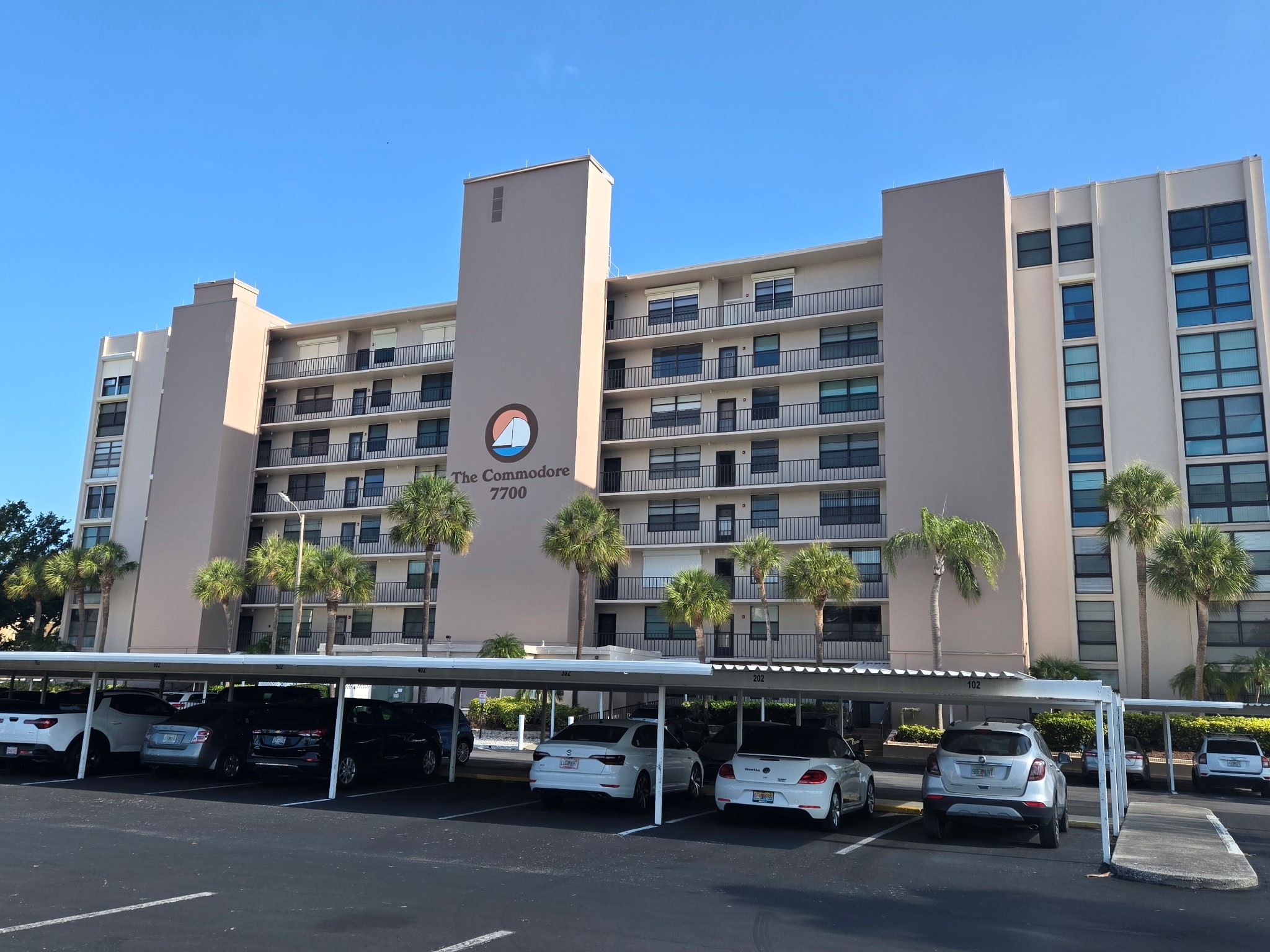
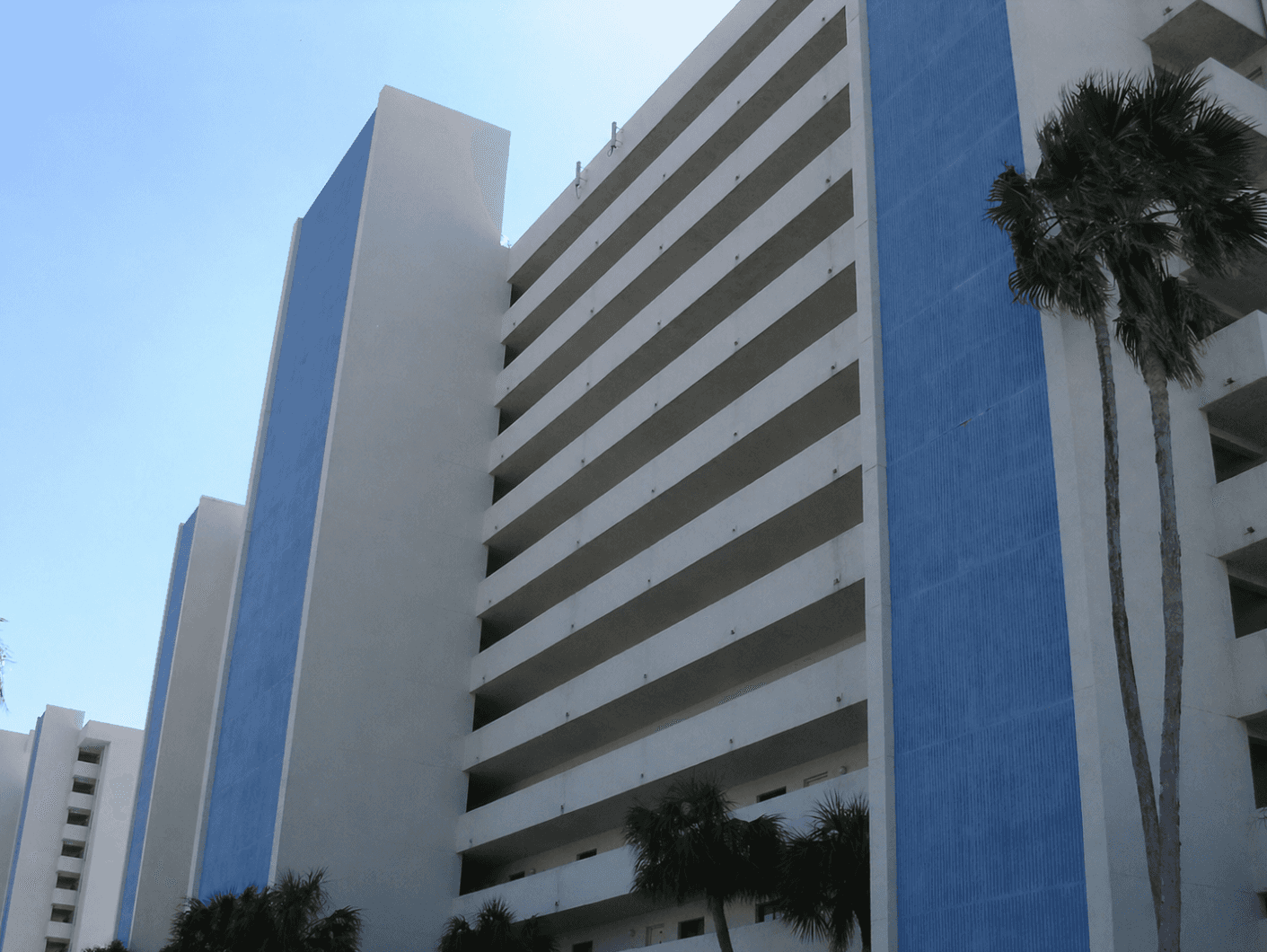
Concrete spall repair
We remove loose and delaminated concrete from balcony slabs and slab edges down to sound material, then rebuild the profile with structural repair mortar. Spalling almost always means the rebar underneath is rusting, so every repair starts by exposing and treating the steel. Edges and drip edges get special attention because that is where water and salt attack first.
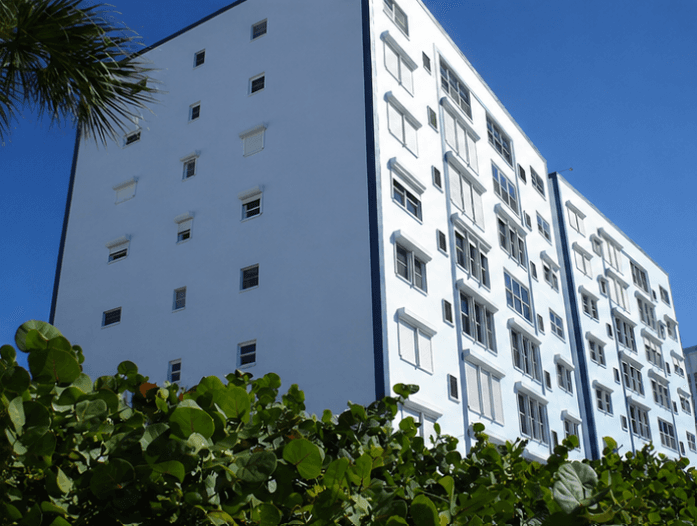
Rebar cleaning and treatment
Once the concrete is opened up, we clean the exposed rebar back to bright steel, removing all rust and scale. The bars are coated with a corrosion inhibitor so the rusting stops instead of spreading behind the patch. Where a bar has lost too much section to do its job, we cut it out and splice in new reinforcement before the concrete goes back.
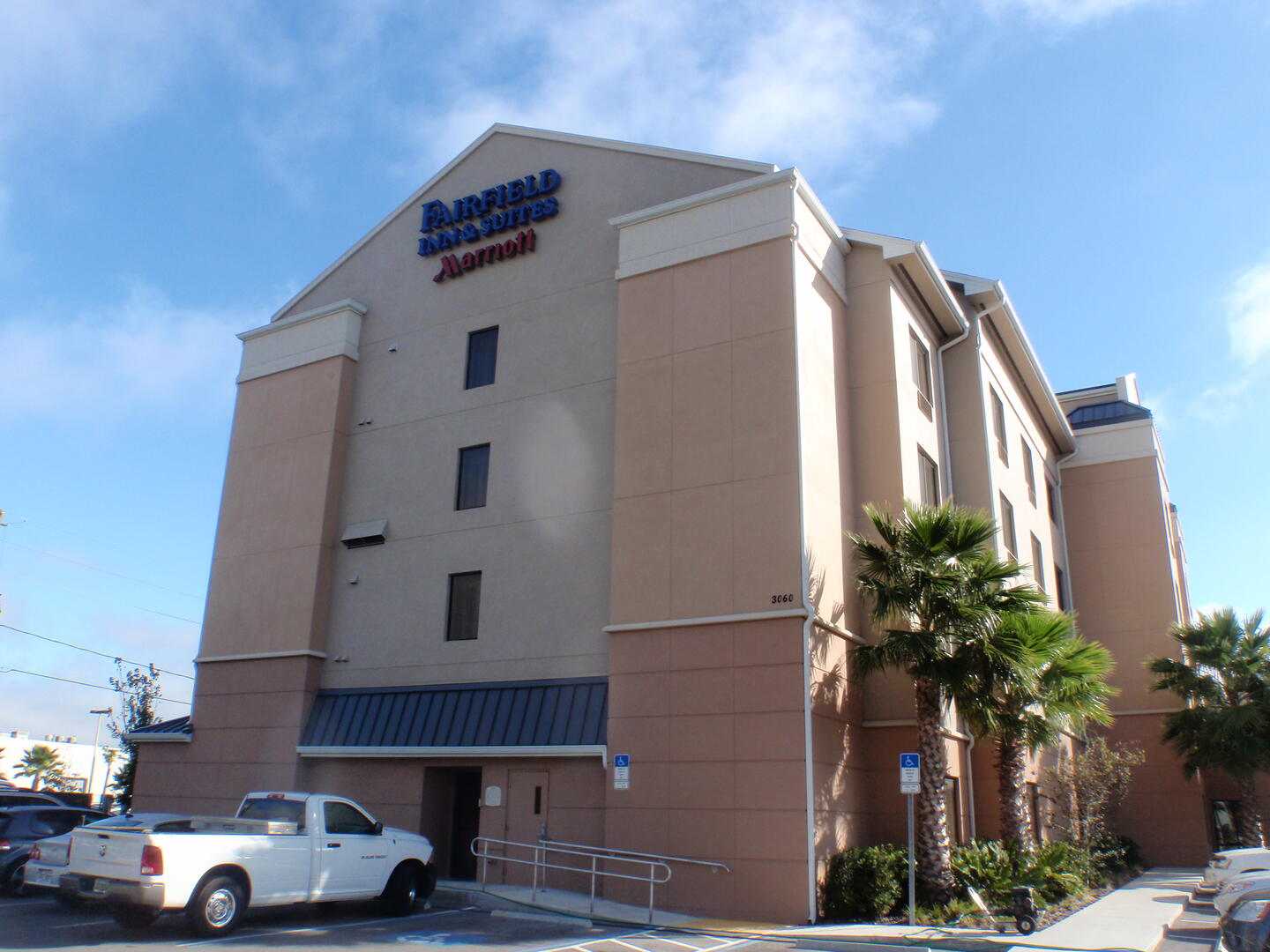
Structural crack injection
Cracks that run through the slab, not just the surface, get routed out and injected with epoxy or polyurethane to bond the concrete back together and keep water out. We identify which cracks are structural and which are cosmetic so the right ones get treated the right way. Sealing active cracks also cuts off another path for water to reach the rebar.
Balcony soffit repair
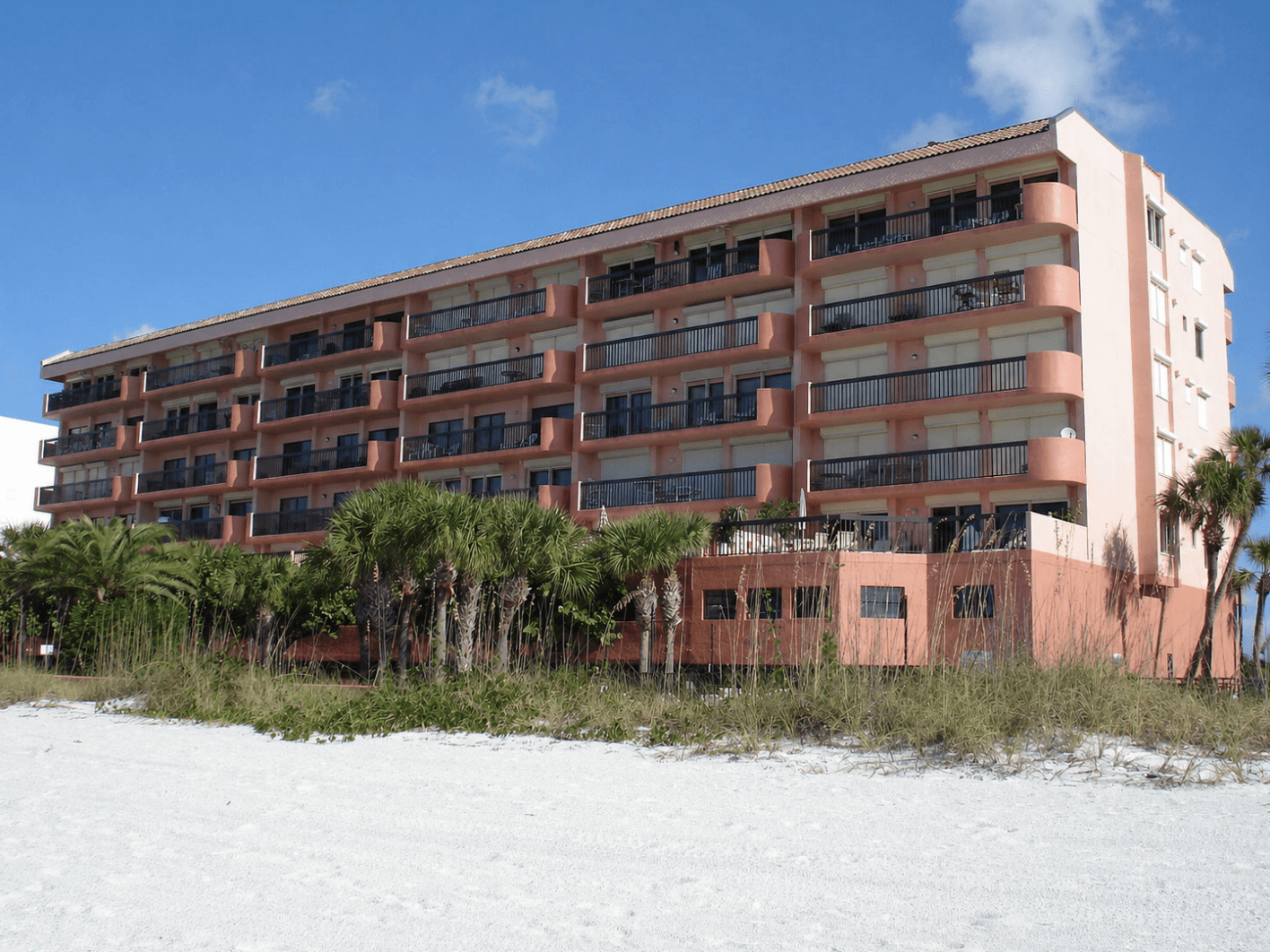
The underside of a balcony, the soffit, is often where corrosion shows up first because water runs to the low edge and sits there. We repair spalled and cracked soffits, treat the exposed steel, and restore the surface so it sheds water again. Fixing the soffit also protects the residents on the balcony below from falling concrete.
Railing removal, reset, and replacement
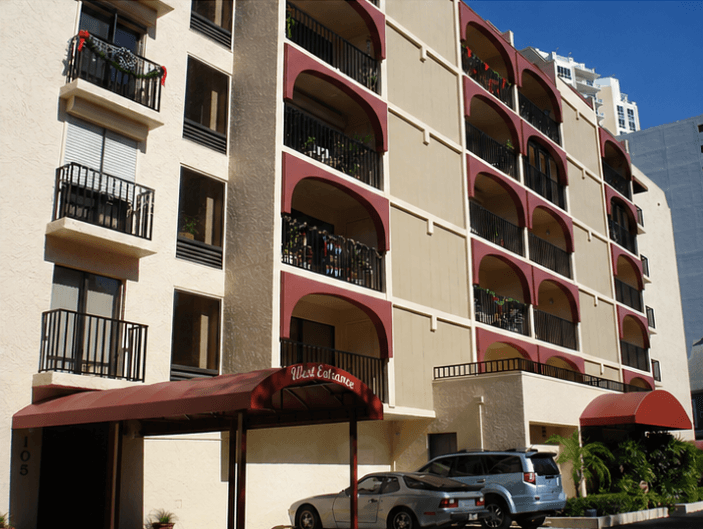
We remove loose or corroded railings, repair the post pockets where they anchor into the slab, and reset or replace the railings so they are solid again. Rusting posts crack the surrounding concrete from the inside, so the pockets are rebuilt and sealed to keep water out. New aluminum railings are set in corrosion-resistant hardware rated for coastal exposure.
Sealant replacement at joints and thresholds
Failed caulk at balcony joints, sliding-door thresholds, and slab edges lets water straight into the structure. We cut out the old sealant, prep and prime the joint, install backer rod, and apply a structural-grade sealant rated for movement and Florida UV. Tight joints keep water on top of the waterproofing instead of behind it. This pairs closely with our waterproofing and sealant replacement work across the building.
Waterproofing membranes and traffic coatings
We install fluid-applied waterproofing membranes and traffic-rated coating systems on balcony decks so the structural slab underneath stays dry. These systems are built to take constant foot traffic while standing up to Florida UV, salt, and ponding water. The coating ties into the slab edges and door thresholds so water runs off instead of soaking into the concrete.
Stucco repair and elastomeric coatings
We repair cracked, hollow, or delaminated stucco on balcony walls and railings, cutting back to sound material and rebuilding the surface. Once the stucco is sound, we finish it with elastomeric coatings that flex with the wall and bridge hairline cracks instead of splitting open again. These coatings are built for Florida sun and salt, so the walls stay sealed and protected between major projects.


OUR PROCESS
Every balcony project follows the same five steps, so your board always knows what is happening and residents are never caught off guard.
01
Walk-through and free consultation
Initial site visit to understand the building and your goals.
02
Photo-documented inspection and prioritized scope
Every defect is documented and ranked by urgency.
03
Detailed proposal with line-item pricing
A written, line-item proposal covering scope, schedule, and the repair methods for each balcony.
04
Execution with resident communication plan
Pre-construction meeting and phased scheduling that minimizes disruption.
05
Closeout with final walk and documentation
Punch list, closeout documentation, and a maintenance plan.


How do we know if our balconies are unsafe?
Warning signs include rust stains, cracked or bulging concrete, exposed rebar, loose railings, and water stains on the soffits below. Any of these is worth a professional look. If you have a real safety concern, restrict access and schedule a walk-through right away, and we can advise whether an engineer should assess it.
Can balconies be repaired while residents are living in the building?
Yes, in almost every case. We phase the work balcony by balcony and coordinate scheduling with your board and residents so units stay accessible and disruption stays low. Residents are told ahead of time when their balcony will be worked on.
Do balcony repairs require a permit?
Structural and many waterproofing repairs usually do require a permit, and requirements vary by scope and jurisdiction. As a licensed contractor we handle the permitting that applies to your project. The simplest way to know what your specific repairs need is to schedule a walk-through.
How long does balcony restoration take?
It depends on how many balconies are involved and how much structural repair each one needs, which we can only tell after inspecting them. Once concrete is opened up we sometimes find more deterioration than the surface showed. We give you a realistic schedule in the proposal and keep you updated if conditions change.
Can you work with our engineer's Milestone report?
Yes. Barrett does not perform Milestone Inspections, but we regularly carry out the repairs an engineer's report calls for. Bring us the report and we will scope and price the balcony work so your building can close out its findings.
What is concrete spalling?
Spalling is when concrete cracks, flakes, or breaks away from the surface. On balconies it usually happens because the steel rebar inside has rusted and expanded, pushing the concrete off. It is one of the clearest signs a balcony needs repair, and it should be looked at promptly.